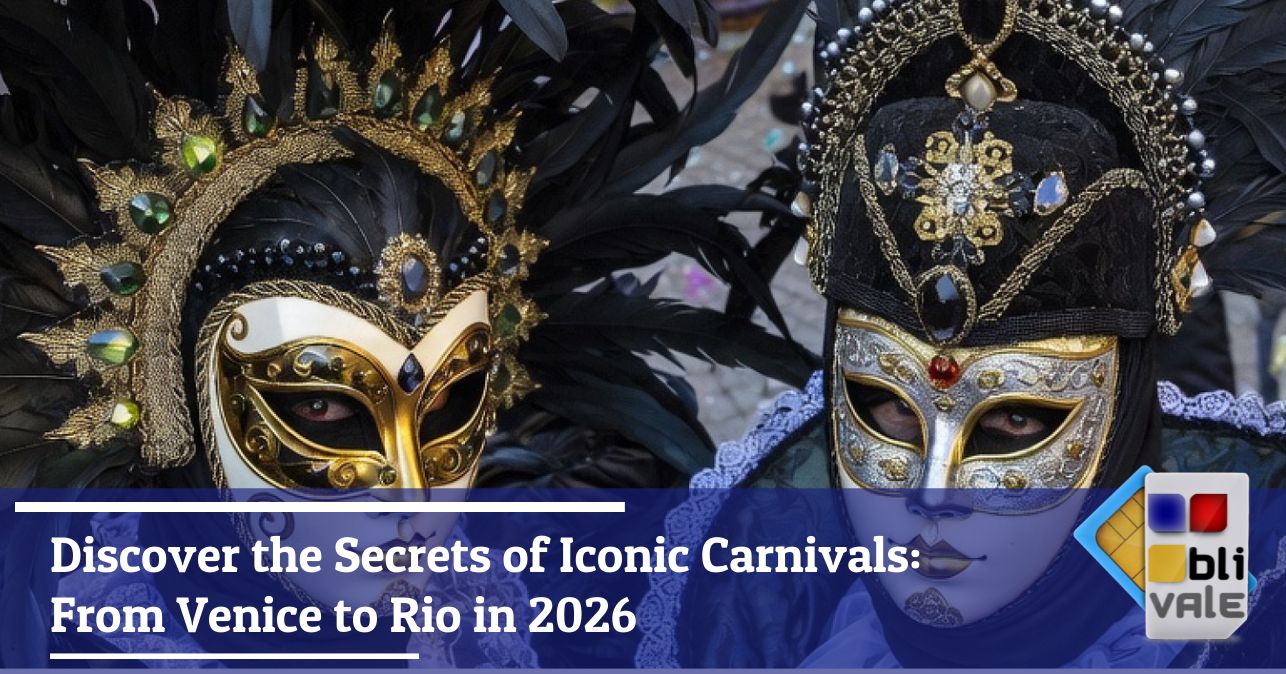
Imagine Dancing Among Masks and Colors
Carnival isn't just a celebration: it's an explosion of colors, sounds, and traditions that spans centuries and continents. In this article, you'll discover the pagan origins of Carnival, its evolution around the world, and a detailed guide to the world's most important carnivals, with dates updated to 2026, peak days, key features, and reasons not to miss them.
The Pagan Origins of Carnival: From Chaos to Celebration
The roots of Carnival are ancient and pagan. They date back to the Greek Dionysian festivals honoring Dionysus, god of wine and excess, and especially to the Roman Saturnalia, during which social hierarchies were overturned for a few days: slaves became masters, people ate and drank without limits, and masks were worn to conceal their identities.
These celebrations were tied to the cycles of nature: the chaos of winter preceding the renewal of spring. Processions with animal masks, fertility rites, and collective banquets were common in many ancient cultures, from Egypt to Mesopotamia.
Why Carnival Evolved Around the World: From the Middle Ages to Globalization
With the arrival of Christianity, the Church transformed these pagan festivals into a period of “carnival” (from the Latin carnem levare = to remove the meat), the last great celebration before the Lenten fast.
In the Middle Ages, carnival became a social outlet: masks and satire allowed people to criticize power without consequences.
With European colonial expansion, Carnival became intertwined with local traditions: in Latin America, African rhythms, indigenous influences, and Catholicism merged; in the Caribbean, forms of cultural resistance emerged; in Europe, local variants rich in symbolism took hold.
Today, Carnival is a global phenomenon that celebrates identity, creativity, inclusivity, and, in many cases, sustainability.
Brazil: Rio de Janeiro Carnival
Where is it : Rio de Janeiro, Brazil.
Period : Pre-Lent, linked to Portuguese Catholic traditions with African and indigenous influences.
When does it start and end in 2026 : From February 13 to February 21, 2026.
Duration : 9 days.
Why you should see it : It's the largest and most spectacular carnival in the world, with over 2 million participants daily; it offers a unique immersion in Brazilian culture, with samba, color, and contagious energy. Ideal for those seeking a global and inclusive party experience.
Peak days : February 14-15 (main parades at the Sambadrome) and February 17 (Mardi Gras).
Features and highlights : Samba parades with 20-meter-high floats, thousands of dancers in dazzling costumes, and competitions between samba schools; highlights include inclusivity (everyone can participate), live music, and an atmosphere of collective joy. It's listed in the Guinness Book of Records as the largest festival on the planet, with a huge economic impact and a historical legacy dating back to 1723.
Click here for the link to BLIVALE's international eSIM for Brazil
Italy: Venice Carnival
Where is it : Venice, Italy.
Period : Pre-Lent, with roots in the Middle Ages (from 1296).
When it starts and ends in 2026 : From January 31 to February 17, 2026 (main events from February 7).
Duration : 18 days.
Why see it : It is the most elegant and mysterious carnival in the world, perfect for those who love art, history and elaborate costumes; it offers a dive into the Venetian past, with masks that erase social classes.
Peak days : February 7-8 (opening with the Flight of the Angel), February 14-15 (main parades) and February 17 (closing with dances).
Features and highlights : Baroque masks, period costumes, masked balls in historic palaces, silent parades on the water; its highlights include its refined atmosphere, its historical uniqueness (abolished by Napoleon and revived in 1979), and its integration with the canals and architecture of Venice. It is one of the oldest and most photographed festivals, with a focus on creativity and mystery.
Click here for the link to BLIVALE's international eSIM for Italy
United States: New Orleans Mardi Gras
Where is it : New Orleans, Louisiana, USA.
Period : Pre-Lent, with French influences from 1699.
When it starts and ends in 2026 : Parades from January 6 to February 17, 2026 (Mardi Gras Day).
Duration : Approximately 6 weeks.
Why you should see it : It's the largest and free party in the USA, with a unique mix of jazz, Creole culture, and party mayhem; ideal for those who want to experience the soul of the American South.
Peak days : February 14-15 (main parades such as Bacchus and Orpheus) and February 17 (Zulu and Rex).
Features and highlights : Parades with floats tossing beads, mugs, and stuffed animals, competing krewes (social clubs), jazz music in the streets; highlights include free admission, ethnic diversity, and the post-Katrina impact as a symbol of resilience. It is one of America's oldest traditions, with over a million visitors.
Click here for the link to BLIVALE's international eSIM for the United States
Germania: Carnevale di Colonia (Cologne Carnival)
Where is it : Cologne, Germany.
Period : Pre-Lent, with sessions beginning November 11.
When it starts and ends in 2026 : Crazy days from February 12 to 17, 2026.
Duration : 6 main days.
Why you should see it : It's one of the largest in Europe, with over a million visitors; perfect for those who love beer, music, and satirical German humor.
Peak days : February 12 (Weiberfastnacht, Women in Power), February 16 (Rose Monday parade) and February 17 (Violet Tuesday).
Features and highlights : Parades with satirical floats, crazy costumes, Kölsch (local beer), and singing; its strengths include impeccable organization, inclusiveness (everyone wears costume), and a medieval tradition. It's an event that combines political satire and celebration, with a profound cultural impact.
Click here for the link to BLIVALE's international eSIM for Germany
France: Nice Carnival
Where is it : Nice, France.
Period : Pre-Lent, from 1873.
When it starts and ends in 2026 : From February 11 to March 1, 2026.
Duration : 19 days.
Why see it : It is one of the oldest and most floral in Europe, with an annual theme (2026: "Vive la Reine"); ideal for families and lovers of beauty.
Peak days : February 11 (Charivari opening), February 14-15 (illuminated parade), February 21 (Battle of the Flowers) and March 1 (closure).
Features and highlights : Flower battles (21 tons of mimosas thrown), caricature floats, illuminated parades; highlights include French elegance, integration with the sea and the Promenade des Anglais, and the eco-friendly aspect of local flowers. It's a refined and visually stunning event.
Click here for the link to BLIVALE's international eSIM for France
Belgium: Binche Carnival
Where is it : Binche, Belgium.
Period : Pre-Lent, from the Middle Ages (UNESCO since 2003).
When does it start and end in 2026 : February 15 to 17, 2026.
Duration : 3 days.
Why you should see it : It's the oldest and most traditional carnival in Europe, with a focus on folklore; perfect for those seeking authenticity and living history.
Peak days : February 15 (costume procession), February 16 (local festivities) and February 17 (Gilles parade with orange throwing).
Characteristics and highlights : Gilles with ostrich feather hats, throwing oranges (a symbol of prosperity), ritual dances; its highlights include the preservation of medieval traditions, its exclusivity (only locals like Gilles) and its recognition as an intangible cultural masterpiece by UNESCO. It is intimate and deeply cultural.
Click here for the link to BLIVALE's international eSIM for Belgium
Spain: Carnival of Santa Cruz de Tenerife
Where is it : Santa Cruz de Tenerife, Canary Islands, Spain.
Period : Pre-Lent, with Latin and African influences.
When it starts and ends in 2026 : From January 31 to February 22, 2026 (main from February 11).
Duration : 23 days.
Why you should see it : It's the second largest in the world after Rio, with a mild climate; it offers a mix of Spanish and Caribbean, ideal for outdoor parties.
Peak days : February 11 (Queen Election), February 13 (Opening Parade), February 17 (Grand Parade) and February 18 (Burial of the Sardine).
Features and highlights : Election of the queen in enormous costumes, parades with Latin music, "murgas" (satirical groups); highlights include the Canarian warmth, the long duration, and integration with nearby beaches. It's lively, colorful, and accessible, with an annual theme.
Click here for the link to BLIVALE's international eSIM for Spain
Trinidad and Tobago: Trinidad Carnival
Location : Port of Spain, Trinidad and Tobago.
Period : Pre-Lent, with African and colonial roots from 1783.
When it starts and ends in 2026 : Events from January 16, but main days February 16-17, 2026.
Duration : 2 main days, but extended season.
Why you should see it : It's the best in the Caribbean, with soca and calypso; perfect for those who love dance and hybrid cultures.
Peak days : February 16 (J'ouvert and parades) and February 17 (grand parade).
Features and highlights : Masquerade bands, steelpan music, "playing mas" (participating in costume); highlights include Caribbean energy, inclusiveness, and anti-slavery heritage. Attracts 200,000 people, with a focus on freedom and rhythm.
Click here for the link to BLIVALE's international eSIM for Trinidad and Tobago
Practical Travel Tips for Carnival 2026
Book at least 6–9 months in advance. Hotels, hostels, and apartments in central areas sell out very quickly (especially in Rio, Venice, New Orleans, and Tenerife). Use platforms like Booking.com, Airbnb, and Expedia, but also check the official carnival websites for official packages.
Choose strategic but safe accommodations
Rio: Copacabana, Ipanema, or downtown (Lapa is lively but more chaotic)
Venice: Mestre or less touristy areas of central Venice to save money
New Orleans: French Quarter o zone vicine (Marigny, Garden District)
Cologne and Nice: historic center or near main tram/metro lines
Buy tickets for the main parades in advance
Rio: Sambadrome sectors (sectors 5, 7, 9, 11, and 13 are the most popular)
Venice: Exclusive Balls (Doge's Ball, Palace Parties)
Tenerife: Seating for the Grand Parade
New Orleans: Many parades are free, but some krewes offer paid grandstands.
Clothing and what to bring
Comfortable shoes (you'll be walking a lot)
Simple costume or accessories (Venetian mask, feathers, beads)
Small anti-pickpocket backpack or fanny pack
Power bank, waterproof phone case
Hat, sunscreen (Rio, Tenerife, Trinidad), k-way or light poncho (possible rain)
Security and wallet
Do not carry visible valuables
Use contactless cards or split cash
Beware of pickpocketing in crowds (especially Rio and Venice on peak days)
Download offline maps (Google Maps or Maps.me )
Internet connection : Purchase an international eSIM before you leave (e.g., BLIVALE, Airalo, Holafly) to get unlimited data without expensive roaming charges. Essential for browsing, booking Uber/Bolt, sharing photos, and staying safe.
Local transport
Rio: Metro + Uber during rush hour
Venice: vaporetti and on foot
New Orleans: streetcar e piedi
Cologne: tram and foot
Nice: tram lines 1 and 2
Tenerife: guagua (bus) or taxi
Times and Strategy Peak days are the busiest: if you want less chaos, choose opening or closing days. Arrive early to secure good positions along the parade route.
Respect for Traditions: In Binche and at certain times in Trinidad, taking close-up photographs of participants without permission is not welcome. Always ask politely.
Realistic budget: Accommodation and food prices can triple during Carnival. Expect to pay 50–100% more than the seasonal average.
Conclusion: Which Carnival will you choose in 2026?
From the elegant mystery of Venice to the explosion of samba in Rio, from the UNESCO folklore of Binche to the sun of Tenerife, every carnival tells a unique story.
With good planning, you can experience these events safely and with maximum enjoyment.
Happy Carnival 2026!